Our Story

How one Japanese-American family turned everyday play into joyful, bilingual learning for little ones.
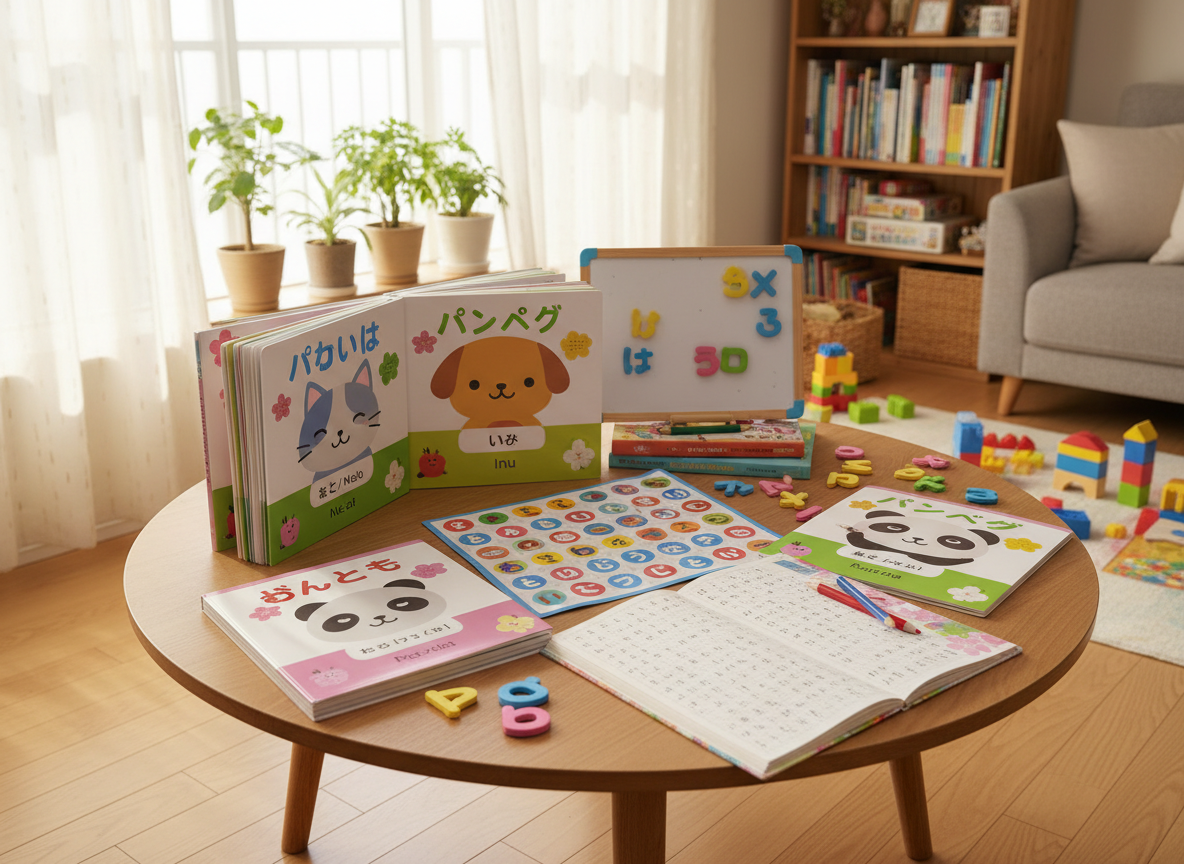
A cozy, low wooden table in a bright family living room, completely covered with colorful Japanese learning materials. A well-worn hiragana chart with rounded, child-friendly fonts lies in the center, surrounded by sturdy picture books showing cute animals labeled in both Japanese and English, soft foam kana magnets scattered near a small whiteboard, and a pair of tiny red-and-blue pencils resting by an open notebook filled with neat handwritten characters. Soft morning light filters through gauzy curtains, creating a gentle glow on the smooth wood floor and casting playful shadows from nearby houseplants. Photographic realism, shot at eye level with a slight angle, shallow depth of field keeping the table sharp while the background toys and bookshelf blur into a warm, inviting, playful atmosphere.
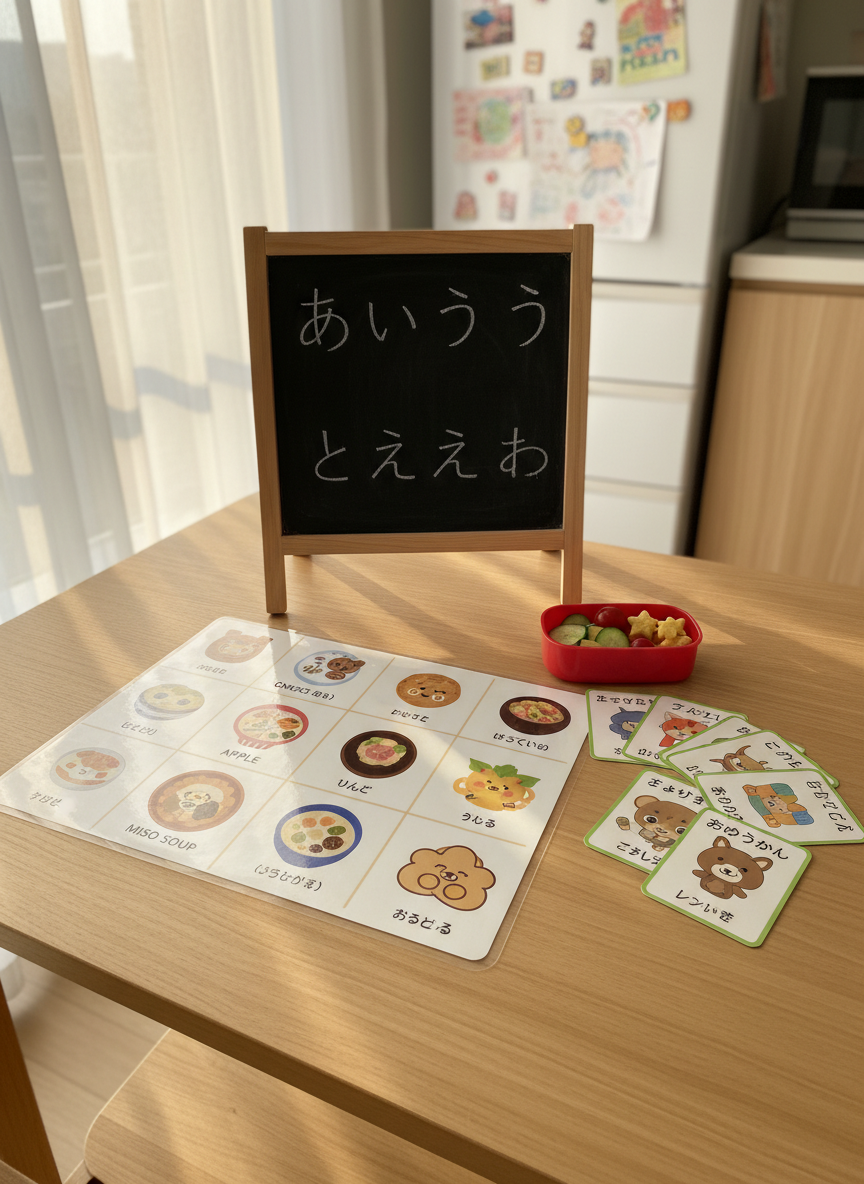
A neatly organized kitchen table transformed into a Japanese language play zone, featuring a laminated bilingual placemat with labeled foods like onigiri, apples, and miso soup in both romaji and hiragana. Beside it, a set of sturdy flashcards with bright illustrations fans out next to a small, open bento box filled with simple, colorful snacks. On the far side of the table, a child-sized chalkboard displays large, carefully drawn kana characters. Golden afternoon light pours in from a nearby window, illuminating wood grain and soft pastel colors, while the background shows a slightly blurred refrigerator with Japanese word magnets. Photographic realism, shot from a slightly elevated angle, with a clean, modern, playful atmosphere perfect for bilingual family learning.

Raising Happy Bilingual Kids

Konnichiwa Little Learners began at our kitchen table, where we mixed Japanese picture books, English storytime, and homemade games to keep heritage language alive for our kids—and share ideas with other multicultural families.

A cozy, low wooden table in a bright family living room, completely covered with colorful Japanese learning materials. A well-worn hiragana chart with rounded, child-friendly fonts lies in the center, surrounded by sturdy picture books showing cute animals labeled in both Japanese and English, soft foam kana magnets scattered near a small whiteboard, and a pair of tiny red-and-blue pencils resting by an open notebook filled with neat handwritten characters. Soft morning light filters through gauzy curtains, creating a gentle glow on the smooth wood floor and casting playful shadows from nearby houseplants. Photographic realism, shot at eye level with a slight angle, shallow depth of field keeping the table sharp while the background toys and bookshelf blur into a warm, inviting, playful atmosphere.

Peek into our living room lessons—floor puzzles, hiragana magnets, and storytime forts—that show how we weave Japanese into real, sometimes messy, everyday family life.

A neatly organized kitchen table transformed into a Japanese language play zone, featuring a laminated bilingual placemat with labeled foods like onigiri, apples, and miso soup in both romaji and hiragana. Beside it, a set of sturdy flashcards with bright illustrations fans out next to a small, open bento box filled with simple, colorful snacks. On the far side of the table, a child-sized chalkboard displays large, carefully drawn kana characters. Golden afternoon light pours in from a nearby window, illuminating wood grain and soft pastel colors, while the background shows a slightly blurred refrigerator with Japanese word magnets. Photographic realism, shot from a slightly elevated angle, with a clean, modern, playful atmosphere perfect for bilingual family learning.

From bento-making mornings to library hauls of Japanese picture books, these candid photos capture simple activities any family can try to make bilingual days feel special.

Voices

Aiko

These ideas finally helped us use Japanese naturally at home. Even my shy preschooler now initiates Japanese games with Grandma on FaceTime.

— Aya Nakamura

Kenji Papa

I love how activities mix English and Japanese, so nothing feels forced. The printables are simple to use after work yet rich.

— Mateo García

Maya S.

Konnichiwa Little Learners made it easy to include Japanese in our bedtime routine. The song lists and book guides are what this mixed-language family needed.

— Lila Patel